

In today’s rapidly evolving world, education must go beyond traditional methods to prepare students for future challenges and opportunities. The integration of STEM (Science, Technology, Engineering, and Mathematics) education, along with robotics, is transforming how students learn, think, and innovate. These approaches not only strengthen academic understanding but also foster creativity, problem-solving, and critical thinking—skills that are essential in the modern world.
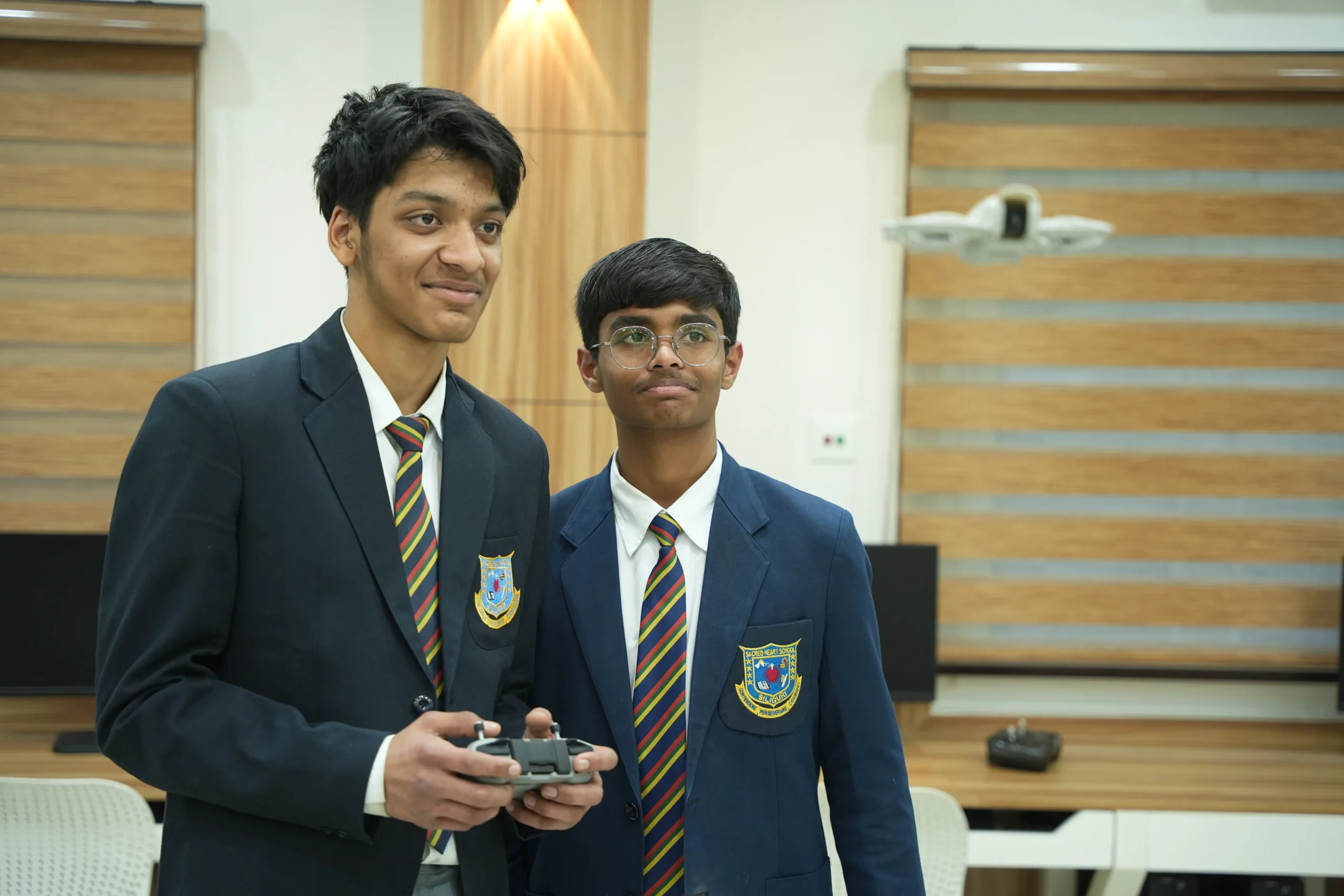
At Sacred Heart School Siliguri, robotics and STEM learning are important components of a forward-thinking educational approach that encourages students to explore, experiment, and innovate.
Moving from Theory to Application
One of the most significant advantages of STEM and robotics education is the shift from theoretical learning to practical application. Instead of only studying concepts in textbooks, students engage in hands-on activities that help them understand how ideas work in real-life situations.
Through robotics sessions and STEM-based learning, students are encouraged to build, test, and refine their ideas. This experiential approach deepens conceptual understanding and helps students develop a natural curiosity for how things work.
Developing Problem-Solving Skills
Robotics challenges students to think critically and solve problems step by step. Whether it is designing a simple model or programming a basic function, students learn to analyze situations, identify issues, and find effective solutions.
This process teaches patience, logical thinking, and resilience. Students learn that mistakes are part of learning and that improvement comes through testing and refinement. These problem-solving skills are valuable not only in academics but also in real-life situations.
Encouraging Creativity and Innovation
Innovation begins with curiosity and creativity. STEM learning provides students with the opportunity to explore new ideas and think beyond conventional approaches. Robotics, in particular, allows students to bring their ideas to life, turning imagination into tangible outcomes.
Students are encouraged to experiment, design, and create solutions, which fosters a mindset of innovation. This creative exploration helps them become confident thinkers who are willing to take initiative and explore new possibilities.
Building Collaboration and Teamwork
Many STEM and robotics activities are conducted in groups, encouraging students to collaborate and share ideas. Working in teams helps students develop communication skills, learn from different perspectives, and understand the importance of cooperation.
Collaboration also teaches responsibility and leadership, as students work together to achieve a common goal. These experiences are essential in preparing students for future academic and professional environments where teamwork plays a crucial role.
Preparing Students for Future Careers
The importance of STEM education continues to grow as industries become more technology-driven. Early exposure to robotics and STEM concepts helps students develop an interest in fields such as engineering, technology, and research.
At Sacred Heart School Siliguri, robotics classes provide foundational exposure to these areas, helping students understand basic principles in a structured and guided manner. This early introduction builds confidence and opens pathways for future academic choices.
Supporting Holistic Development
While robotics and STEM focus on technical skills, they also contribute to overall development. Students build confidence, improve concentration, and develop a disciplined approach to learning.
In a residential school environment, structured schedules ensure that students can balance academics, STEM activities, and co-curricular engagement effectively. This balanced approach ensures that students grow not only academically but also personally.
A Future-Ready Approach to Education
At Sacred Heart School Siliguri, the integration of robotics and STEM learning reflects a commitment to preparing students for a future that values innovation and adaptability. By combining academic knowledge with practical exposure, the school creates an environment where students are encouraged to think independently and explore new ideas.
As education continues to evolve, robotics and STEM learning play a vital role in shaping confident, capable, and innovative individuals who are ready to meet the demands of a changing world.