
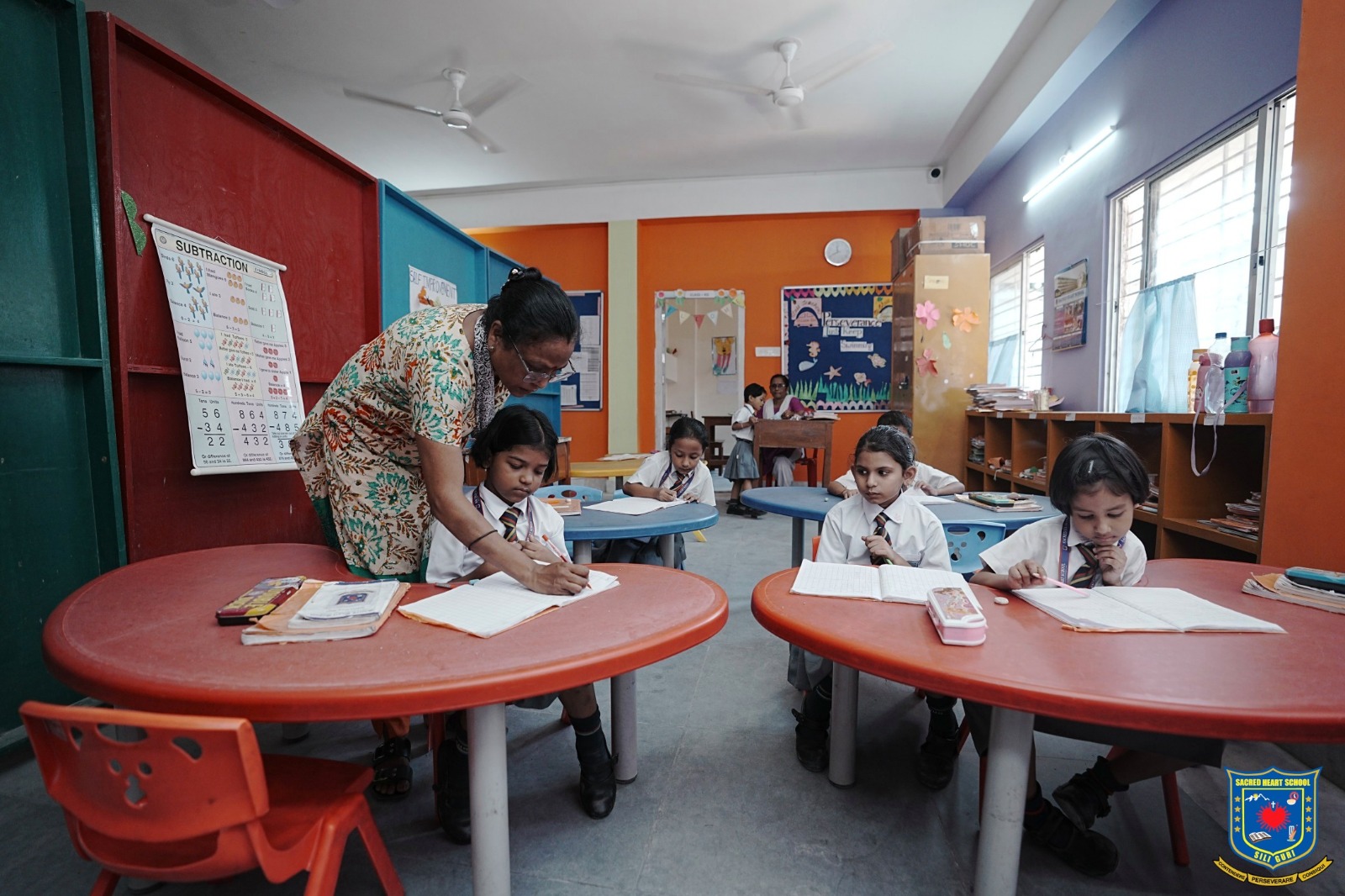
The Power of Positive Reinforcement in Education: Boosting Student Success
Meta Description: Discover how positive reinforcement in schools enhances student motivation, builds self-esteem, and fosters academic success. Learn effective strategies for encouragement in education.
Introduction
Every child thrives in an environment where they feel valued and supported. At Sacred Heart School Siliguri, we believe that positive reinforcement is a cornerstone of effective education. By recognising and rewarding effort, educators not only shape student behaviour but also cultivate a love for learning that lasts a lifetime. In this blog, we explore the science behind positive reinforcement, its psychological benefits, and practical ways to implement it in schools.
Understanding Positive Reinforcement in Education
Positive reinforcement in education involves acknowledging and rewarding desired behaviours to encourage their repetition. Unlike punitive measures, this approach focuses on reinforcing good habits—whether academic, social, or emotional—through praise, incentives, and encouragement.
At Sacred Heart School Siliguri, we integrate positive reinforcement into daily lessons, fostering an environment where students feel motivated to excel. By recognising their achievements—big or small—we help them develop confidence and a growth mindset.
The Psychological Benefits of Positive Reinforcement
Decades of research in behavioural psychology confirm that positive reinforcement strengthens learning. When students receive timely encouragement, their brains release dopamine—a neurotransmitter linked to motivation and pleasure. This neurological response makes learning more enjoyable and fosters long-term engagement.
Key psychological benefits include:
- Increased intrinsic motivation – Students engage in tasks because they find them rewarding, not just for external approval.
- Reduced anxiety and stress – A supportive learning environment alleviates performance pressure, leading to better mental health.
- Greater resilience – Consistent positive feedback helps students persevere through challenges.
At Sacred Heart, our pastoral care program and mental health support systems ensure that every student feels encouraged and understood.
How Positive Reinforcement Shapes Student Behaviour
Behavioural psychology shows that reinforcement strengthens specific actions. When teachers praise effort, students are more likely to:
- Participate actively in class
- Complete assignments on time
- Exhibit positive social interactions
Our faculty at Sacred Heart uses constructive feedback to guide students, reinforcing their strengths while gently addressing areas for improvement. Instead of punitive measures, we focus on redirection and affirmations to nurture responsible behaviour.
Building Self-Esteem Through Encouragement
One of the most profound effects of positive reinforcement is its impact on self-esteem. When students receive recognition for their efforts, they develop:
- A stronger self-concept – They see themselves as capable learners.
- Willingness to take risks – Encouragement reduces the fear of failure.
- Better peer relationships – A positive classroom culture fosters empathy and teamwork.
Through programs like School Cinema, Sacred Heart integrates value-based learning that reinforces kindness, perseverance, and leadership.
Practical Strategies for Implementing Positive Reinforcement
Here are some effective techniques used by educators at Sacred Heart School:
- Verbal Praise – Specific feedback (“You worked hard on this project!”) is more impactful than generic praise.
- Reward Systems – Stickers, certificates, and “student of the week” recognitions motivate consistent effort.
- Classroom Incentives – Group rewards encourage collaboration (e.g., extra playtime for collective achievements).
- Personalised Encouragement – Understanding each child’s unique needs to tailor reinforcement.
Our student-teacher ratio allows for individual attention, ensuring every learner receives the encouragement they need.
Effective Reward Systems for Different Age Groups
For Younger Students (Primary Level)
- Sticker charts for completed tasks
- Fun classroom privileges (e.g., choosing a game)
- Public recognition during assemblies
For Middle School Students
- Points-based reward systems leading to tangible benefits
- Leadership opportunities as “peer mentors”
- Special privileges (e.g., designing a bulletin board)
For Senior Students (ICSE & ISC Levels)
- Certificates of excellence in academics, sports, and arts
- Access to advanced learning resources or workshops
- Positive feedback in report cards and parent-teacher meetings
Sacred Heart’s holistic development framework ensures that motivation strategies align with students’ evolving needs.
Common Mistakes to Avoid When Using Positive Reinforcement
While positive reinforcement is powerful, improper implementation can undermine its effectiveness. Some pitfalls to avoid:
- Over-reliance on material rewards – Intrinsic motivation is stronger than external incentives.
- Inconsistent reinforcement – Behavioural change requires consistent recognition.
- Generic praise – Specific feedback (“Your problem-solving skills improved!”) is more meaningful.
At Sacred Heart, our teachers receive training to implement reinforcement strategies thoughtfully, maintaining balance in student motivation.
Success Stories: Positive Reinforcement in Action
We’ve seen students who once hesitated to speak up in class blossom into confident presenters through encouragement. Others, initially struggling academically, developed resilience and problem-solving skills when their efforts were consistently acknowledged.
Our student-led initiatives, such as the Ninetanks Filmmaking Club, showcase how positive reinforcement nurtures creativity and leadership. Many participants have produced award-winning films, attributing their success to a supportive school environment.
Long-Term Impact on Academic Performance
Beyond immediate behavioural improvements, positive reinforcement fosters lifelong learning habits. Studies show that students who experience encouragement:
- Develop stronger study discipline
- Perform better in exams
- Pursue higher education with greater confidence
Our ICSE and ISC students consistently achieve exceptional results, partly because of a system that values effort and progress.
Conclusion
Positive reinforcement is more than a teaching strategy—it’s a philosophy that builds resilient, motivated, and confident learners. At Sacred Heart School Siliguri, we integrate these principles into every classroom, sport, and extracurricular activity, ensuring students thrive academically and personally.
For parents seeking a school where encouragement and excellence go hand in hand, Sacred Heart stands as the ideal choice in Siliguri, North Bengal, and for students from Nepal, Sikkim, and Bihar.
Discover our nurturing campus—where every child’s potential is recognised and cherished.